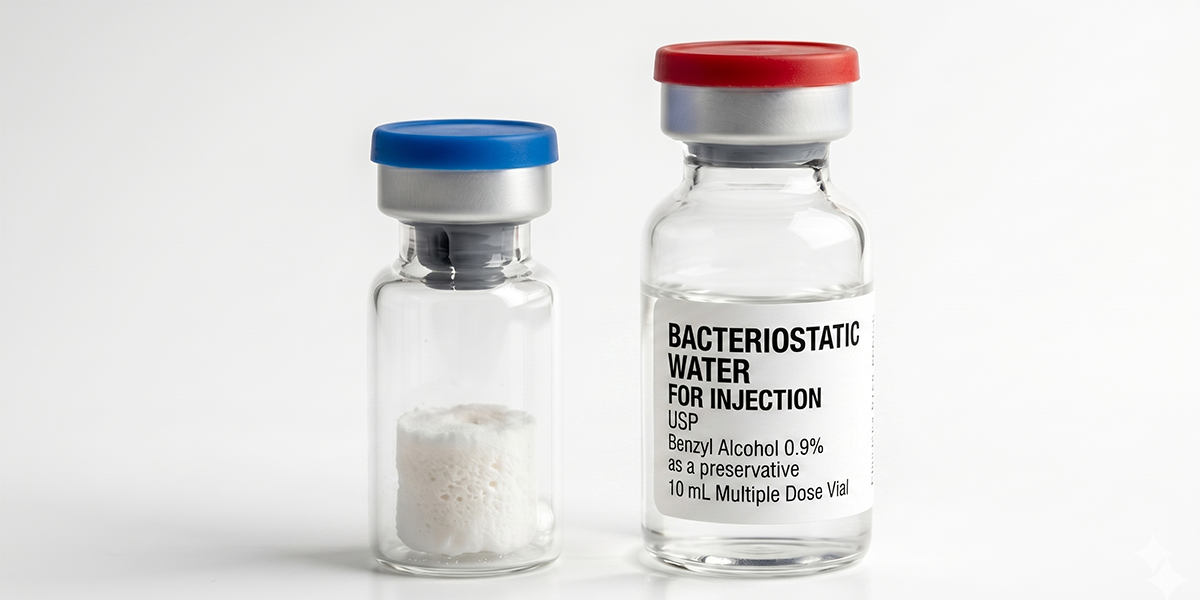
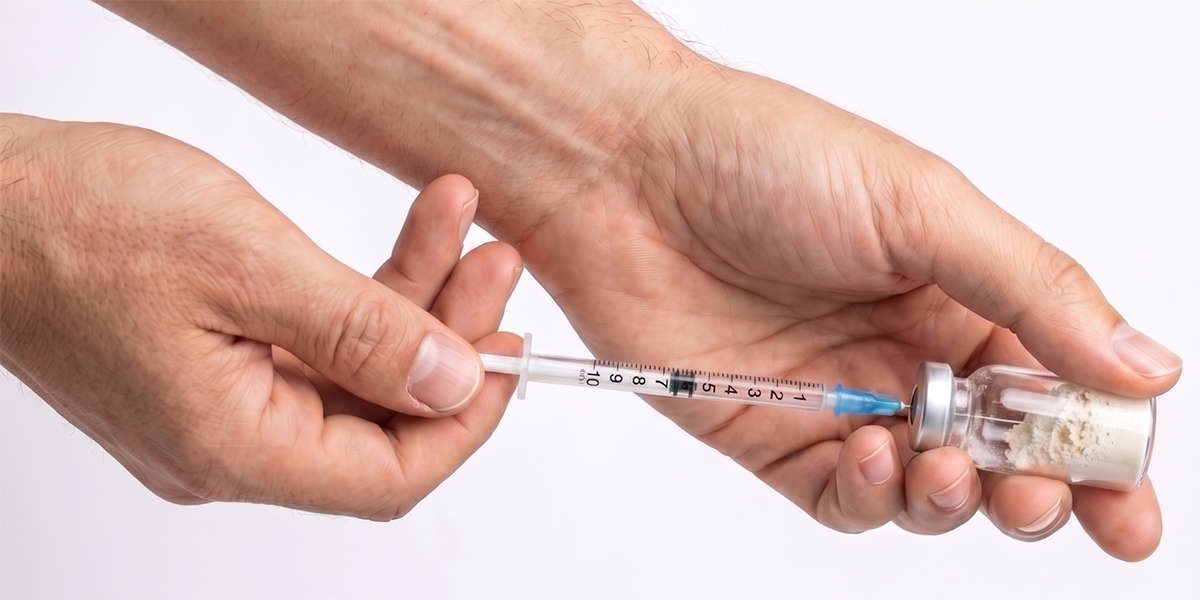
All peptides on this site have been lyophilized. Lyophilization is a freeze-drying process that removes water to stabilize and preserve the peptide and extend shelf life. In a vial, a lyophilized peptide looks like a small cake of powder.
Lyophilized peptides require reconstitution to be injectable liquids.
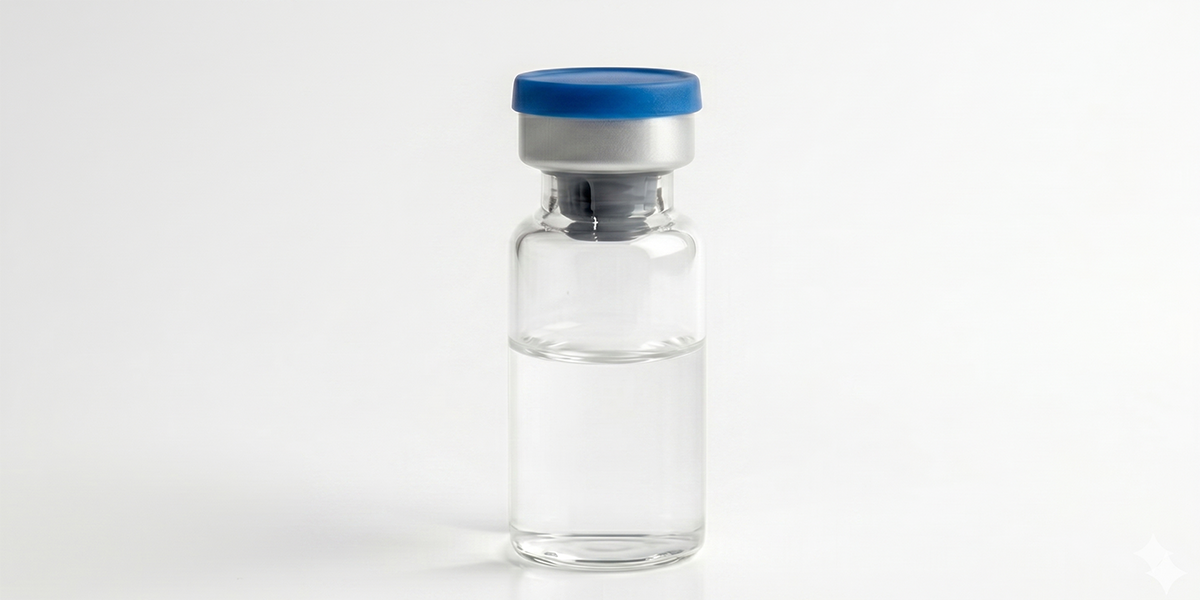
Reconstitution solution is bacteriostatic water. Containing 0.9% benzyl alcohol, “BAC water” is designed for multiple uses from the same vial. The preservative kills bacteria that might be introduced through multiple uses from the same vial.
Using BAC water
In general and for the peptides on this site, there is no particular amount of BAC water required to reconstitute a particular peptide. It’s about math and manageability. As long as the amount of solution fully dissolves the peptide, you can choose to reconstitute with an amount of BAC water that will result in the injection volume you’re comfortable with.
For 3mL vials, 1mL (100 units) of BAC water is the usual. You could, however, use .5mL (50 units) to reduce large fluid volumes of high dosages or 2mL (200 units) to more accurately draw a small dosage.
Reconstitution Step by Step
- Supplies you need: BAC water, a 50- or 100-unit syringe, your vial of peptide, alcohol prep pads
- To prepare for reconstitution, the peptide should be fully thawed after a night in the refrigerator. Let the peptide and the BAC water sit out long enough to come to room temperature. Review the section on Storage & Stability.
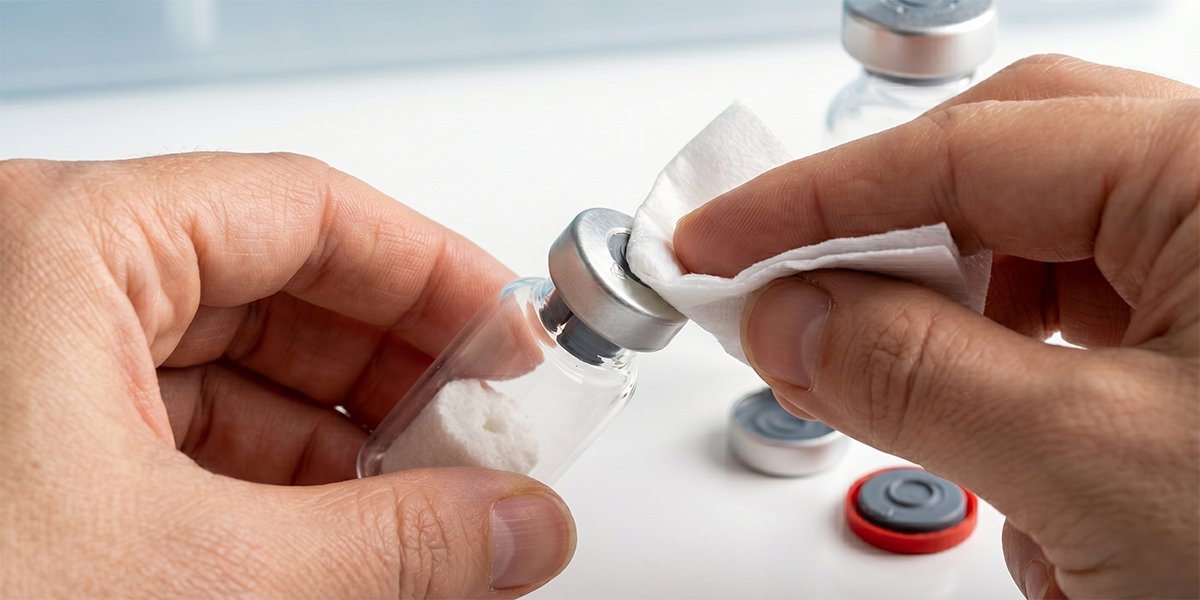
- Remove the caps from the vials. The cap is held on by a crimped metal ring. You’ll break it when you pry the cap off. Wipe the rubber stopper of each vial with an alcohol prep pad. Let them dry completely.
- You understand the relationship between milliliters, milligrams, and units. Review the section on Syringes & Units.
- Consider your dosage and decide on the injection volume in units that you’re comfortable with.
- Use a Peptide Calculator to determine how much BAC water you’ll use for your injection units target. .5mL to 2mL (50 units to 200 units) is typical
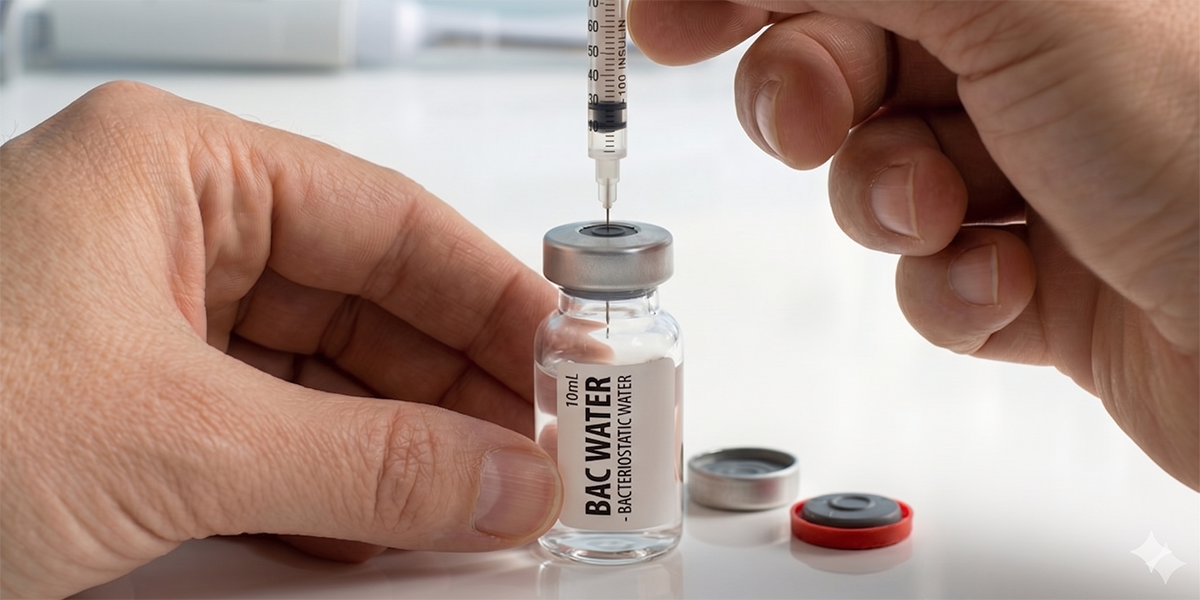
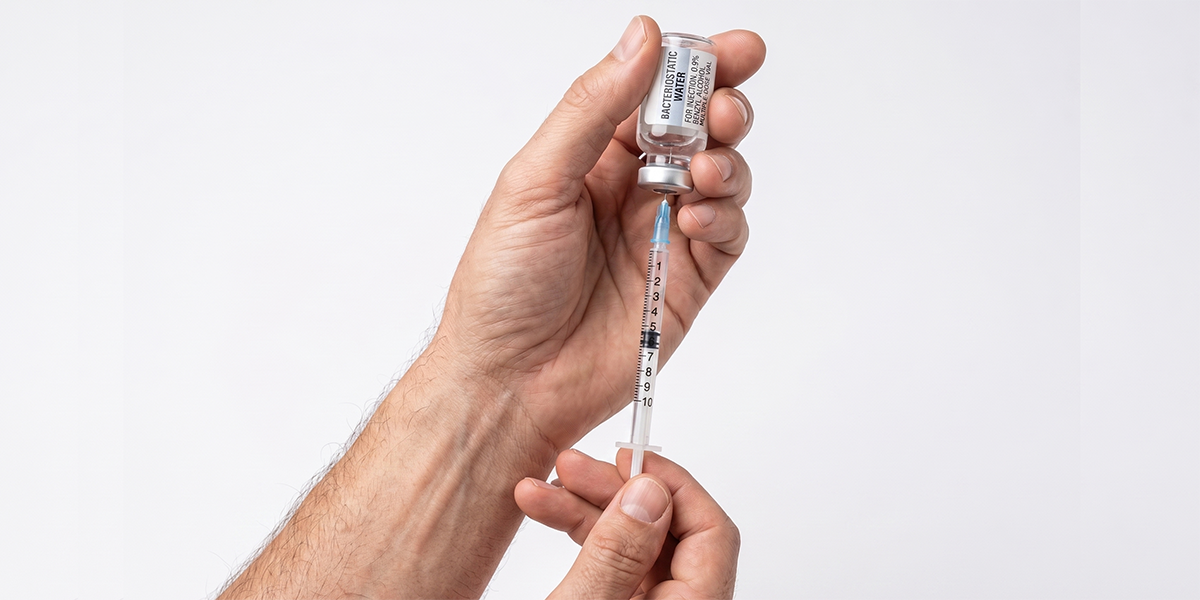
- Pull the plunger of your empty syringe back to the same volume of water you intend to use. With the BAC water vial right side up, pierce the rubber stopper in the dead center and inject that air into the vial’s air pocket to prevent a vacuum.
- With the syringe in the BAC water vial, hold it upside down to draw the amount of water you need into the syringe.
- A vacuum in the peptide vial will pull the water in. Hold the peptide vial sideways. Hold the syringe and the plunger to control the flow of water into the peptide vial. Insert the syringe of BAC water into the dead center of the rubber stopper. Let it drip into the side of the vial; do not let it shoot directly into the peptide.
- Withdraw the syringe and gently swirl the BAC water in the vial until the peptide is fully dissolved. The water should be completely clear.
- Reconstituted peptides must be kept refrigerated. Do not freeze! The vial rubber stoppers are “self-healing” to re-seal the contents.