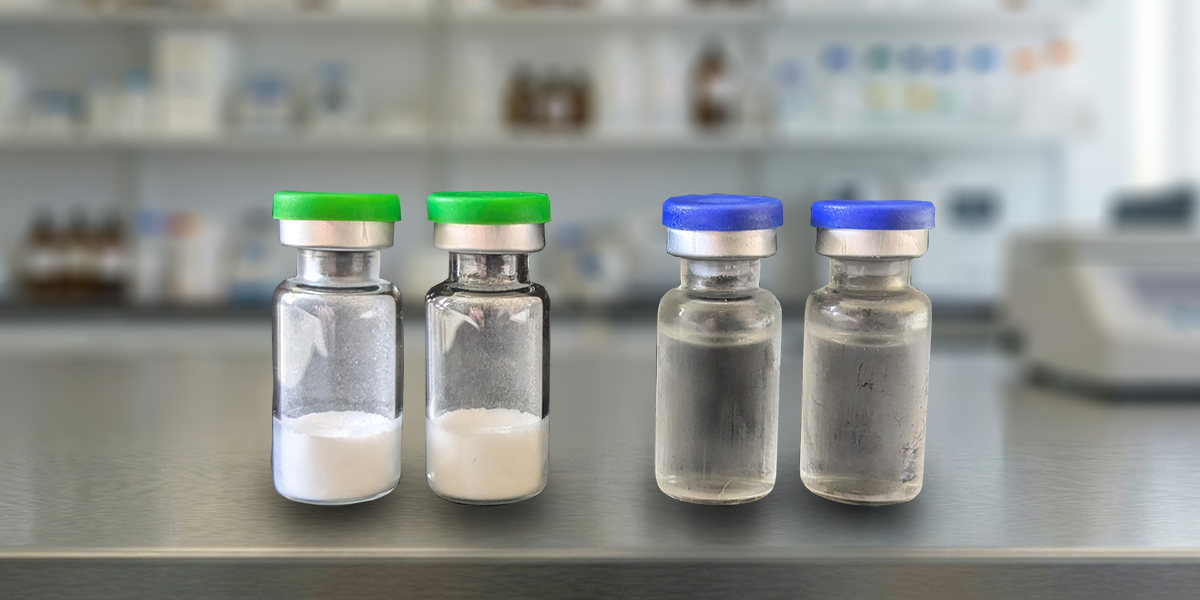
Peptides are highly sensitive to temperature, light, and mechanical stress. In a lyophilized state, peptides can be stable but best practices will maintain the quality of a compound.
All peptides on this site have been lyophilized. Lyophilization is a freeze-drying process that removes water to stabilize and preserve the peptide and extend shelf life. In a vial, a lyophilized peptide looks like a small cake of powder.
Whether lyophilized or reconstituted, ALWAYS AVOID TEMPERATURE CHANGE EXTREMES.
Lyophilized Peptides
In a lyophilized state, peptides can be stored frozen up to two years. If you receive the peptide and it is at room temperature, place it in a refrigerator for a few hours before transferring it to a freezer.
In the freezer, place peptides in a location where they may sit undisturbed. A large chest-style freezer is ideal for long-term storage.
Before reconstituting a peptide that’s been in the freezer, place it in the refrigerator overnight. When you are ready to reconstitute, let it sit out at room temperature for at least a half hour. The bacteriostatic water you use for reconstitution should also be allowed to stand out at room temperature for the same amount of time. Condensation in the vial or being hit by cold water can instantly degrade a peptide.
Be careful to avoid freeze-thaw cycles. If you need to transport a frozen peptide, place it in a ziplock freezer bag and pack it in ice in a cooler.
Reconstituted Peptides
After reconstitution, peptides must be kept in the refrigerator.
Before an injection, check that the peptide is still clear. If it is cloudy or has floating particles, the peptide has become contaminated. Discard it immediately.
Refrigerated peptides should be used within 4 to 6 weeks, max. Keep your dosage protocol in mind when making a purchase and choose accordingly. Do not purchase a large vial you can’t use up within the recommended 4 to 6 weeks.
Do not freeze a reconstituted peptide.